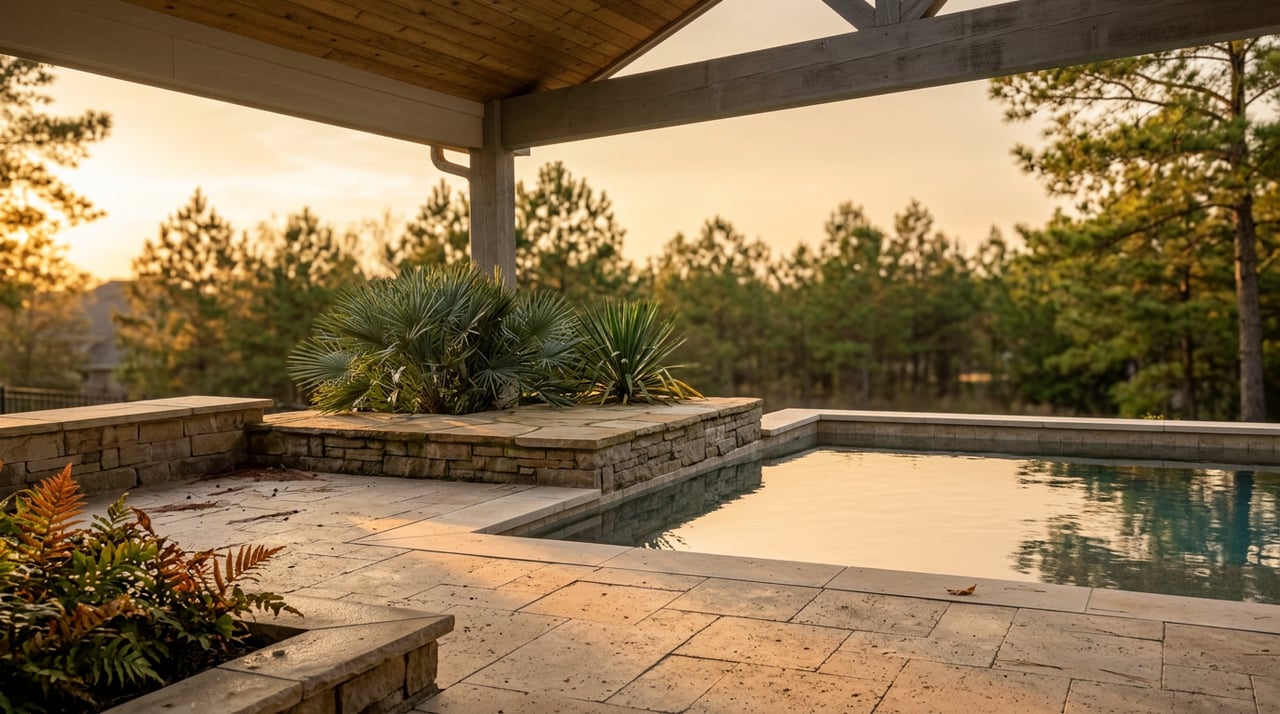
Picture the scene: a homeowner in one of the older villages is getting ready to list, going through the paperwork drawer to fill out the Texas Seller's Disclosure Notice. Room additions, check. New roof three years ago, check. Then they get to the outdoor kitchen built the summer before last, the one with the pergola and the built-in grill. They call the contractor, who's since retired. They check the county's online permit lookup. Nothing. They assume that's the end of it, because everyone knows the Houston area has no zoning, so there was probably nothing to file in the first place.
That assumption is where the trouble starts. The Woodlands runs on a system that has nothing to do with zoning and everything to do with a signature the homeowner may never have gotten.
The Zoning Myth Doesn't Hold Up Here
Houston's absence of zoning is well known, and it's real. But The Woodlands isn't a city, and it never adopted zoning because it didn't need to. Instead, nearly every residential lot in the community is bound by recorded covenants, deed restrictions that predate the Township itself. Those covenants were originally written and enforced by three separate entities, The Woodlands Community Association, The Woodlands Association, and The Woodlands Commercial Owners Association, before responsibility moved to The Woodlands Township in a 2010 governance transition. The rules didn't loosen when that happened. They just changed hands.
Each developed village elects its own Residential Design Review Committee, a group of at least three resident volunteers serving one-year terms, and that committee has to approve most exterior changes before they happen, not after. The Township's Covenant Administration Department supports these committees and processes the applications, but the committee members are neighbors, not city staff. And the rules aren't even uniform across The Woodlands. Villages like Panther Creek, Grogan's Mill, Cochran's Crossing, and the part of Indian Springs east of Falconwing Drive follow one set of Neighborhood Criteria, while Alden Bridge, College Park, Creekside Park, Sterling Ridge, and the western half of Indian Springs follow another. A patio cover approved without a second thought in one village might need a variance in the next one over.
Two Signatures, Not One
This is the part that catches sellers off guard. Covenant approval and a government building permit are not the same thing, and getting one doesn't mean you have the other.
| Covenant Approval (RDRC) | Government Permit | |
|---|---|---|
| Who administers it | Village Residential Design Review Committee, supported by Township Covenant Administration | Montgomery County Permit Department |
| What it covers | Design, materials, color, placement, fit with the neighborhood | Structural safety, code compliance |
| Review timeline | Complete applications are acted on within 45 days | Varies by project type |
| What happens if skipped | Compliance notice, possible litigation to force a cure | Fines, inspection failures, insurance and financing complications |
For most structural projects, homeowners need both approvals running at the same time. Anything that adds a structure, an addition, a covered patio, a detached building, generally also needs a development permit from the Montgomery County Permit Department, which can be reached at 936-539-7836. Getting a county permit stamped doesn't satisfy the village committee, and getting the village committee's approval doesn't satisfy the county. They are two different files, kept by two different offices, and neither one automatically tells the other that a project happened.
The List Is Longer Than Most Owners Remember
The 2024 Residential Development Standards, recorded with Montgomery County on December 10, 2024, spell out what requires committee sign-off before work starts:
- Room additions and garage conversions
- Fences, patio covers, decks, and paving
- Pools, spas, and outdoor kitchens
- Storage buildings, arbors, and summer kitchens
- Exterior color changes and full repainting
- Roof replacement
- Satellite dishes and exterior lighting
Pools carry extra weight in this process. Beyond committee approval, the Township requires inspections and a refundable compliance deposit for pool construction, on top of the standard International Residential Code security barrier requirements that apply to any pool, spa, or hot tub. A homeowner who added a pool eight years ago and never circled back to close out that deposit or confirm the inspection sign-off has an open item sitting in a Township file, waiting to surface the moment someone pulls records for a sale.
"The Covenants require... prior written approval of the Residential Design Review Committee."
That single sentence, straight from the recorded Standards, is the whole system in miniature. Not a suggestion. Not a courtesy notice. Prior written approval, before the work happens.
What an Approval Gap Actually Costs at Closing
Here's where covenant compliance stops being a neighborhood matter and becomes a legal one. Texas Property Code Section 5.008 requires every seller to complete a Seller's Disclosure Notice and deliver it to the buyer before the contract becomes binding. If that notice isn't delivered on time, the buyer can terminate for any reason within seven days of receiving it late. The standard TREC-based form doesn't just ask about roof age and working appliances. It asks specifically about unpermitted additions and about known violations of deed restrictions.
That means a homeowner in The Woodlands who skipped RDRC approval on a patio cover isn't just dealing with a county permitting gap. They're dealing with a covenant violation that the disclosure form is designed to surface, whether or not a county inspector ever got involved. Sellers who mark that box "No" when they know otherwise aren't avoiding a paperwork hassle, they're creating a fraud exposure that follows the sale.
The practical fallout tends to show up on the financing side. Buyers using conventional, FHA, or VA loans are the majority of the market, and lenders can be strict about work that was never permitted or approved, particularly when it touches square footage or structural elements. An appraiser reviewing a garage conversion or an added room without paperwork on file may decline to count that space toward the home's conditioned area, which can pull the appraised value below the contract price and stall the loan. None of that requires anyone to prove the work was done poorly. It only requires the paper trail to be missing.
The Timing Problem Nobody Budgets For
Even sellers who decide to fix the gap before listing run into a calendar problem. Each village's Residential Design Review Committee meets monthly, not on demand, and a complete application still takes up to 45 days to act on. Miss a submission deadline or get asked for a revision, and the next opportunity is a full cycle away. Retroactive approval on a pool or an addition isn't a same-week fix. It's a project with its own timeline, one that needs to start well before a listing date gets set, not after an offer is already in hand.
Before You List, Do This
- Contact Covenant Administration and request your property's file, including any RDRC approvals on record for pools, patios, fences, additions, or exterior changes made during your ownership
- Cross-check that file against Montgomery County's permit records for the same projects, since the two rarely match automatically
- If a project is missing paperwork on one or both sides, decide early whether to pursue retroactive approval, disclose it as-is, or remove the improvement before listing
- Write disclosure language that names the specific project and what you know and don't know about its approval history, rather than a general reference to "improvements"
- Loop your agent in on this before the listing photos get scheduled, not after a buyer's inspector flags something the appraiser then has to weigh in on
Frequently Asked Questions
Does The Woodlands have a city building department I can call for permit records? No. The Woodlands Township is a special-purpose district, not a city, and it doesn't issue building permits or run a code enforcement office. Structural permits for most residential work come from the Montgomery County Permit Department. Covenant approval, which covers design and placement, comes separately from the Township's Covenant Administration Department and the village RDRC.
The work looks fine and nobody's complained. Do I really have to disclose it? Texas Property Code Section 5.008 asks sellers to disclose known unpermitted additions and known violations of deed restrictions, regardless of how the work looks or whether a neighbor has ever objected. The obligation is about what you know, not about whether it's been noticed.
Why do my neighbor's rules seem different from mine? Neighborhood Criteria vary by village on top of the Township-wide Standards. A project that's pre-approved in one village boundary may require full committee review a few streets over, particularly across the east and west Falconwing Drive divisions that separate several of the older and newer villages.
Sorting out what's approved, what isn't, and what that means for your timeline and your price is exactly the kind of detail work that shouldn't wait until a buyer's inspector finds it first. Jenny Hill has spent nearly two decades helping Northwest Houston sellers get ahead of these questions instead of reacting to them. Schedule a consultation before you list, and find out what your covenant file actually says.