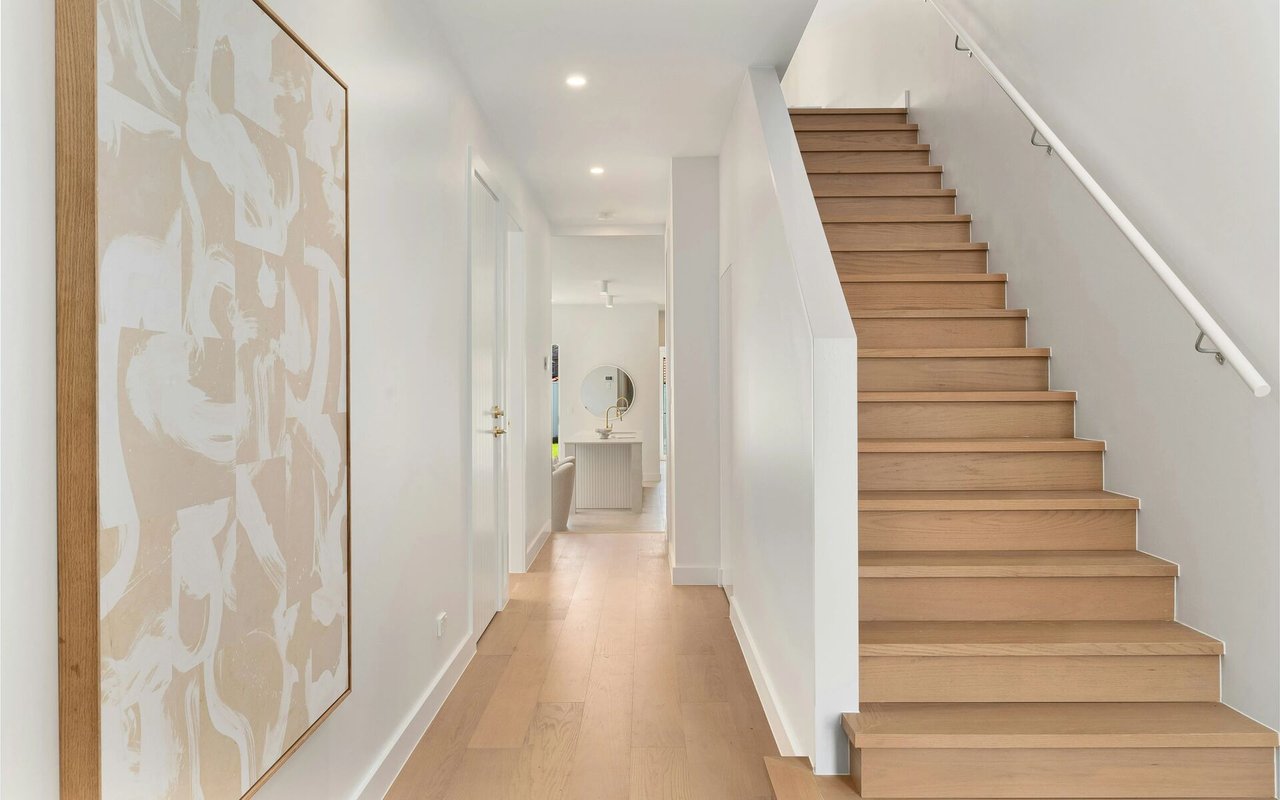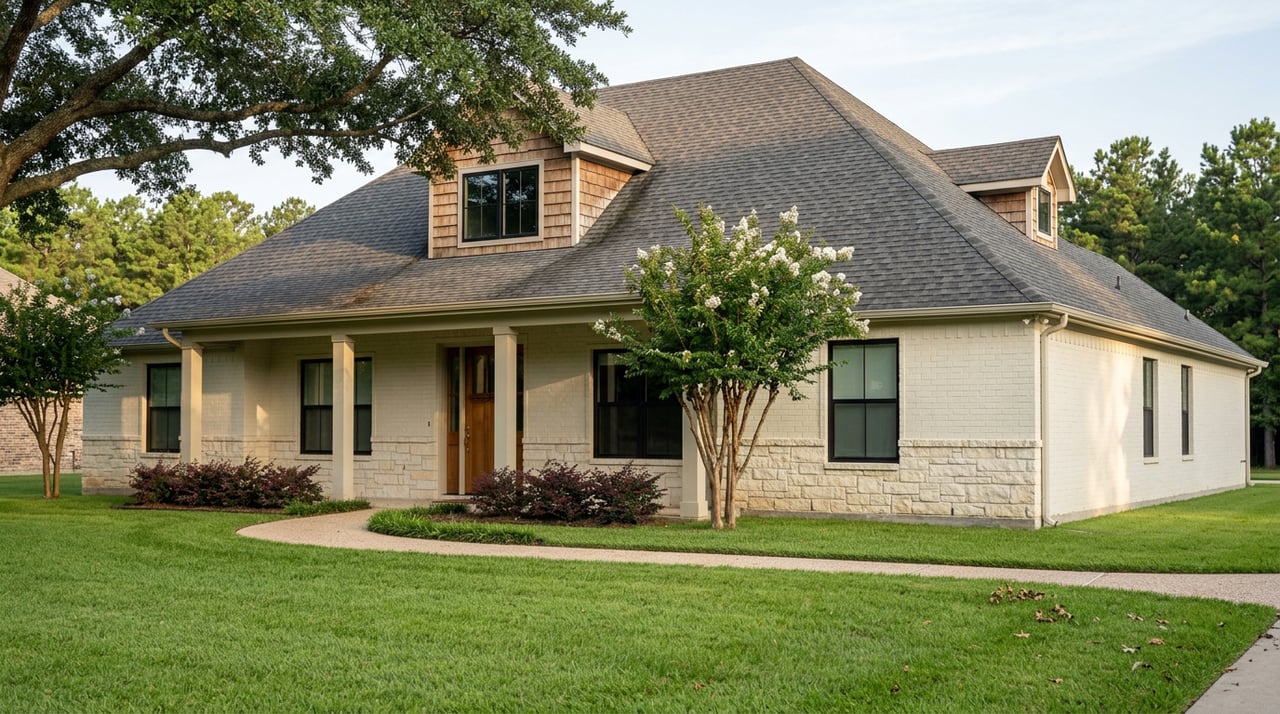
Two homes, both carrying the Woodlands name, both built to a similar standard, priced within about $60,000 of each other. One recent example that surfaced in tax records showed a home assessed near $345,000 with a combined tax rate of 2.14 percent, producing an annual bill of roughly $7,388. A newer home nearby, assessed at $405,390, carried a combined rate of 3.42 percent, an effective tax burden well over $12,000 in its first year and climbing past $13,800 the year after. The lower-priced home paid less. The higher-priced home paid quite a bit more. Nothing surprising there, except that the gap wasn't driven by price at all.
If you're comparing The Woodlands to Montgomery right now, you've probably already absorbed the conventional wisdom: The Woodlands is the pricier, more polished market, and Montgomery, farther from the city core, is the value play with the lighter tax load. That framing isn't wrong exactly, but it skips the mechanism that actually sets your bill. The neighborhood name on the real estate sign tells you almost nothing about what you'll pay every January. What tells you something is the age of the bonds behind your municipal utility district, and which specific school district's boundary your parcel happens to sit inside.
The Number Buyers Look At Is the Wrong Number
Most of Northwest Houston outside incorporated cities runs on Municipal Utility Districts, local entities that issue bonds to build the water, sewer, drainage, and road infrastructure a new subdivision needs before a city utility system exists to serve it. Homeowners repay those bonds through a MUD tax line on their county statement, and the rate on that line falls as the bonds get paid down. Woodlands Water, the utility operator for many of the community's MUDs, confirms the basic mechanic: rates vary district to district because each one carries a different age and condition of infrastructure, and older debt naturally shrinks over time.
That's why the mature MUDs inside The Woodlands now run remarkably low, generally $0.07 to $0.17 per $100 of assessed value as of the 2025-26 tax year, with nine of ten residential MUDs in the district actually cutting their rate again in 2025, according to a 2026 property tax analysis of Montgomery County. Compare that to a district still in its early bond-repayment years. Montgomery County MUD 121, for instance, currently carries a special tax of $0.83 per $100 of assessed value specifically to fund water, sewer, road, and park bonds, with the district retaining authority to raise that rate further if debt service requires it. The gap between a paid-down MUD and an active one can run ten times over, and it has nothing to do with how expensive the house is.
Same Brand Name, Different City and School District
Here's where it gets less intuitive. Communities that market themselves under the same well-known name don't necessarily share a tax authority. A comparison document published by The Woodlands Hills community itself lays this out plainly: homes in its Willis section fall under the City of Willis and Willis ISD, while homes in its Grand Central Park section fall under the City of Conroe and Conroe ISD. Two addresses, one shared brand, two entirely different tax stacks.
That's exactly what shows up in the worked example above. The lower-tax, established Woodlands home sat in unincorporated territory under Conroe ISD, paying into a mature MUD (MUD #1) with a rate of just 0.075. The newer, higher-tax Woodlands Hills home fell under the City of Conroe's own tax, Willis ISD instead of Conroe ISD, and a MUD, MC MUD 128A, still carrying a 1.1 rate. Here's how that actually broke down, jurisdiction by jurisdiction:
| Jurisdiction | Established Woodlands Village | Newer Woodlands Hills Section |
|---|---|---|
| Montgomery County | 0.4475 | 0.4475 |
| City tax | none (unincorporated) | 0.4375 (City of Conroe) |
| Montgomery County Hospital | 0.0589 | 0.0589 |
| Lone Star College | 0.1078 | 0.1078 |
| School district | 1.23 (Conroe ISD) | 1.27 (Willis ISD) |
| Township / MUD | 0.224 (Township) + 0.075 (MUD #1) | 1.1 (MC MUD 128A) |
| Combined rate | 2.1432% | 3.4217% |
Those two homes carry the same brand recognition and sit a few miles apart. Their owners write very different checks each year, and the school district line and the MUD line, not the county or hospital charges, account for nearly all of it.
Montgomery Runs a Different Math, But the Same Lesson
Montgomery ISD adopted its tax rate for the 2025-26 school year in August 2025, setting the combined Maintenance and Operations plus Interest and Sinking rate at $1.0912 per $100 of value, unchanged from the year before. That sits below Conroe ISD's rate, which has run closer to 1.19 to 1.23 depending on the year. Before a single MUD dollar enters the picture, a Montgomery ISD parcel starts with a modest structural advantage over a Conroe ISD parcel.
Layer the MUD question on top and the pattern from The Woodlands repeats itself in Montgomery, just with different addresses attached. Several established Lake Conroe communities, including Lake Conroe Village, Grand Lake Estates, Falcon Sound on the Lake, and Grand Harbor, have posted combined rates clustering near 1.91 percent, consistent with retired or nearly retired MUD bonds. Newer developments in the same broad Montgomery market, including Walden, Bentwater, and Woodforest, have run measurably higher, with Bentwater posting figures in the 2.24 to 2.33 percent range and Woodforest reaching 2.79 to 2.93 percent depending on the section. The lesson from The Woodlands holds here too: the age of the debt behind your specific address matters more than the name of the subdivision.
What to Ask Before You Compare Two Listings
A list price comparison alone will mislead you in either market. Before you weigh two homes against each other, it's worth getting answers to a short set of questions:
- Which specific MUD, or MUDs, serve this exact parcel, and what is its current combined rate?
- Are that district's bonds still actively being repaid, or substantially retired?
- Which school district actually taxes this address? The mailing city on a listing doesn't always match the taxing school district.
- Does your homestead exemption reduce the MUD portion of your bill? It doesn't. MUD tax is assessed against your full appraised value regardless of homestead status, according to the same 2026 Montgomery County tax analysis cited above.
- Has the MUD board approved, or is it considering, a future bond election or capital project that could push the rate higher?
Your title company and the MUD's own office can usually answer the district and bond questions directly, and a straight comparison across two properties, MUD tax plus school tax plus county and utility charges, will tell you more than either home's list price ever will.
The One Change That Applies to Both Markets
Not everything in this picture depends on which side of the county line you buy in. Texas voters approved Proposition 13 in November 2025, raising the school district homestead exemption from $100,000 to $140,000 for the 2026 tax year, a change that applies equally in Conroe ISD and Montgomery ISD territory. For a typical Conroe ISD homeowner, that exemption is expected to save roughly $1,330 a year in school taxes alone, per the same Montgomery County tax analysis. It's a welcome offset, but it only touches the school tax line. The MUD tax, the piece of the bill that actually varies most between an established section and a brand-new one, isn't affected by any homestead exemption at all.
Quick Answers
Does a lower home price always mean a lower tax bill? No. The worked example above shows a less expensive, established home carrying a lower combined rate than a pricier new build a few miles away, because MUD age and school district, not price, drove the difference.
Will my homestead exemption reduce my MUD tax? No. MUD taxes are calculated against your full appraised value with no homestead reduction applied, even though your school and county taxes benefit from the exemption.
Do MUD tax rates ever go down on their own? Yes. As a district pays down its bonds, its rate typically declines, which is why many of The Woodlands' oldest MUDs now sit near the bottom of the county's range.
How do I find out which MUD covers a specific address? Your county tax statement lists it directly, and the Montgomery County Tax Office and Montgomery Central Appraisal District can confirm it before you ever make an offer.
If you're weighing a move between The Woodlands and Montgomery and want a real side-by-side comparison of what two specific properties will actually cost you to carry, not just what they're listed at, that's exactly the kind of groundwork worth doing before you write an offer. Jenny Hill has spent close to two decades helping Northwest Houston buyers see past the sticker price to the full picture. Schedule a consultation and bring your shortlist.